
Your business already generates thousands of data points every day — sales, inventory movements, customer purchases, cash transactions, supplier orders. The question is: how much of that data is being read back to you in a way that helps you make a better decision tomorrow morning?
For most growing businesses, the honest answer is almost none. The data sits scattered across systems, spreadsheets, and people's heads. Reports are assembled by hand, arrive late, and answer last month's questions. Meanwhile, decisions that should take seconds take days.
This article walks through what an AI-powered data intelligence system actually does — using a real-world scenario we work with: a multi-location food trading operation. But here's the important part:
Why this example matters to you
We use a food trading chain as the worked example because it's one of the hardest cases — perishable stock, dozens of locations, cash handling, and sales data you don't even own. If data intelligence works here, it works anywhere. The same approach applies to retail, healthcare distribution, professional services, logistics, e-commerce — any business with more data than visibility.
The example: 50+ selling points, one blind spot
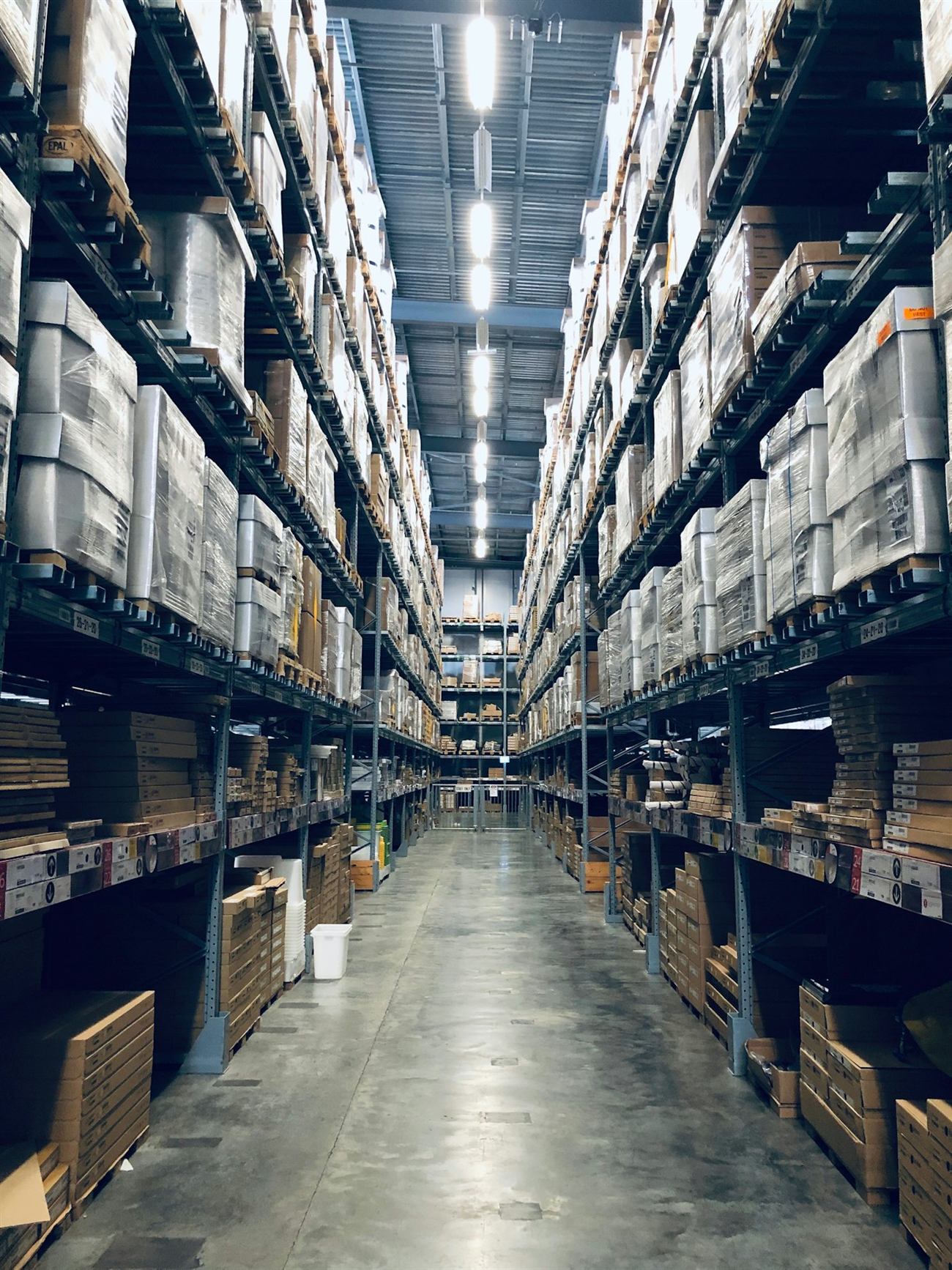
Picture a food trading business at real scale: one central warehouse, ten retail stores, and more than forty consignment kiosks inside major host supermarkets. The kind of scale that's hard-won — and that quietly creates blind spots:
- The host supermarkets run the kiosk tills and report sales once a month — so the largest selling network in the business operates with a 30-day visibility lag.
- Food expires before it sells, and nobody finds out until month-end stock counts.
- Cash variances at owned stores accumulate quietly and are hard to investigate weeks later.
- Some locations look successful on revenue but quietly lose money on margin and waste.
- The best customers and the worst customers get identical pricing and credit terms.
- Buyers order on intuition and last month's history rather than seasonal patterns.
None of these problems exist because the team isn't working hard. They exist because the business has outgrown the manual systems that got it here. The solution is not more people — it's a layer of intelligence on top of the systems that already exist.
Two mornings
The morning, today
You arrive at the office. The accounts team is still pulling reports. Managers are sending Excel files at different times in different formats. You ask, "How did we do yesterday?" and wait for someone to call you back. By 11 AM you have a partial picture. By the time you make a decision, the day is half over.
The morning, after
It's 6:30 AM. Your phone receives one message. It contains yesterday's total sales, your top and bottom locations, stock batches expiring within seven days with recommended actions, any location flagged for cash variance, and one anomaly the system thinks you should look at. You finish your first coffee already knowing more about your business than you used to know by month-end — and your team didn't lift a finger to produce any of it.
What we build is a second brain for your business. It watches every location, every product, every customer, and your money — 24/7 — and tells you in plain language what's going right, what's going wrong, and what to do about it.
The four layers of a data intelligence system
The system is built in four connected layers. Each one delivers value on its own; together they create a capability that compounds over time without ever needing to be replaced.
Data Foundation
All your scattered data — ERP, POS, settlement reports, spreadsheets — flows into one organised place every night, so every report and dashboard is built on the same single source of truth.
Daily Operations
Automated daily reports delivered to leadership before the workday starts. Live dashboards for every location, product, and KPI. The manual morning report cycle disappears.
Business Intelligence
Customer scoring, demand forecasting, anomaly detection, expiry alerts, cash variance tracking, and procurement optimisation — raw data turned into proactive decisions.
AI Layer
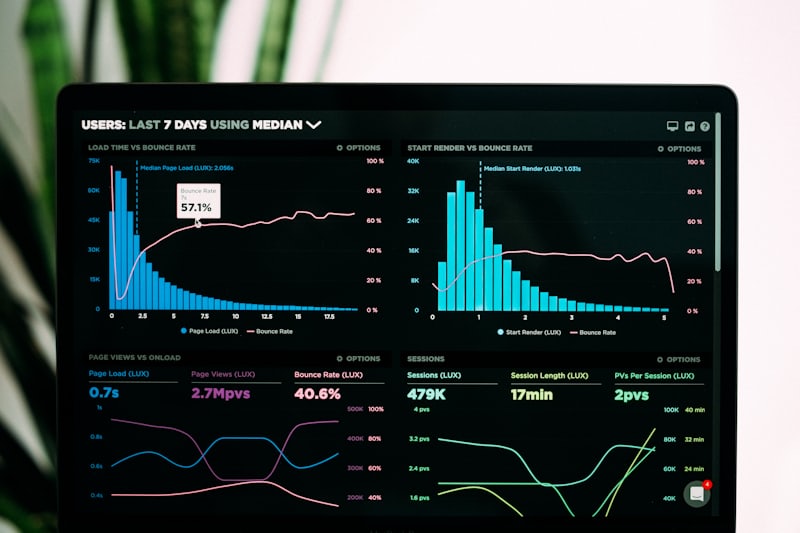
An internal AI assistant that knows your business. Ask any question in plain English — "Which locations are losing margin this month?" — and get an answer with charts in seconds.
What this looks like in practice
Example — stock that saves itself
Fifty cases of yogurt sit in the warehouse, expiring in seven days. The system already knows one store sells yogurt four times faster than another, and one kiosk has been moving it three times faster than its peers this month. At 7 AM the warehouse manager gets an alert: "Move these 50 cases — 30 to the fast store, 20 to the fast kiosk on tomorrow's route. They'll sell through before expiry. Left where they are, they'll be written off next week." One alert. Across a year, hundreds of these alerts protect serious money.
Example — closing a 30-day visibility gap
A merchandiser visits a host supermarket kiosk and fills a two-minute mobile form: units remaining per product, shelf issues, near-expiry stock. By 11 AM operations sees it on a dashboard. The system independently cross-checks reported sales against stock delivered minus stock observed, and flags any kiosk where the numbers disagree. At month-end, everything reconciles against the host's official settlement. Within a few months, daily estimates typically land within a few percent of the official numbers — daily visibility into a network that used to report once a month.


Your customers are not all the same — stop treating them that way
The customer who orders large volumes twice a week and pays on time gets the same pricing as the one who orders unpredictably and pays late. That's unfair to your best customers and risky for your business.
A customer intelligence layer scores every customer automatically — on frequency, volume, recency, payment behaviour, and margin contribution — and places them in tiers. Your best customers get the best pricing, priority during shortages, and proactive attention. Risky accounts move to tighter terms. When a top customer's order pattern drops, the system flags it within days — not after they've already left.
- Smarter pricing — discounts flow to the customers who actually contribute the most.
- Lower credit risk — limits adjust automatically based on real payment behaviour.
- Better retention — churn signals are caught early, while there's still time to act.
- Stronger margin — you finally see which customers are profit-positive vs revenue-only.
What changes for your business
Stripped of the technology language, here's what a system like this actually delivers:
- You stop losing money to expired or dead stock. Businesses with perishable or seasonal inventory typically write off a meaningful share of inventory value every year — automated alerts and transfer recommendations cut that figure significantly.
- You see the truth about every location. True profitability — after waste, cost of goods, staffing, and slow stock — becomes visible. Some "small" locations turn out to be your best performers.
- You stop over-ordering and under-ordering. Demand forecasting typically reduces inventory holding by 15–20% while reducing stockouts — freeing working capital for growth.
- Your cash reconciles daily, not weeks too late.
- Your team stops being human calculators. The hours spent assembling reports move to the system, and your people do what humans do best — relationships, planning, negotiation.
- You make decisions faster. When any answer is ten seconds away, you make more decisions, better decisions, faster decisions — and that compounds.
Built in phases — never a big bang
A project like this should never be built in one push. We start with a focused proof-of-concept on a sample of your business — real reports on your real data within weeks — and then roll out in phases. Each phase delivers visible value on its own, and you stay in control of the pace and the budget at every step.
This is the same philosophy behind everything we build at Forzateks: as a Zoho Authorized Partner with Certified Developers, we combine the Zoho ecosystem, custom development, Python automation, and AI integration — and we operate like an R&D company, so our clients always get modern, future-proof solutions.
Could this work for your business?
Whether you run stores, kiosks, warehouses, clinics, projects, or portfolios — if your business generates more data than visibility, the answer is almost certainly yes. The first conversation costs nothing and carries no obligation.
Let's Connect →